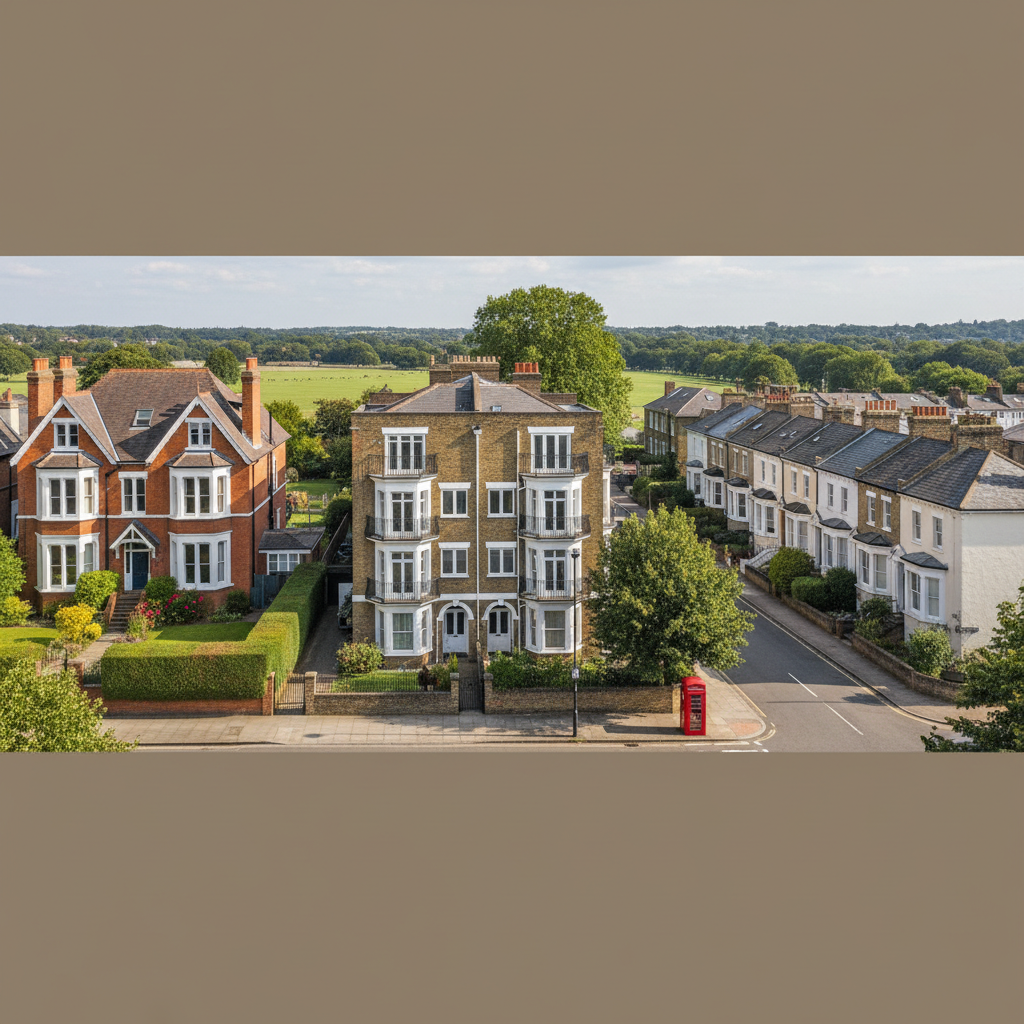
Is the humble terrace now the most resilient asset on the Teddington map? In the current TW11 property market, many assume that the expansive, detached residences are the primary drivers of growth. However, a closer look at the data for August 2026 reveals that the reliable terraced cottage is currently providing the most stability for local homeowners.
Here is the outlook for the remainder of 2026: despite broader economic headlines, the disparity between different property types in our neighbourhood is widening. We are observing a "Great Reshuffle" where the largest homes are not necessarily the ones seeing the most significant equity gains.
The Big Picture: Why the Bank of England Influences Your Home
The Bank of England has maintained the base rate at 3.75%. While this figure may seem abstract, it serves as a primary lever for local property values. With inflation currently at 2.8%, the bank is keeping rates at this level to manage the cost of living.
For residents on Holmesdale Road or near Teddington High Street, this means the cost of borrowing remains a significant factor in decision-making. While average earnings are growing by 3.5%, buyers are becoming increasingly selective about which "slice" of the TW11 market they commit to.
The TW11 Price Gap
Current asking prices across the postcode show a significant climb between the different rungs of the property ladder:
- Flats: The entry point for the area, averaging £414,518.
- Terraced Houses: The mid-point, currently around £915,344.
- Semi-Detached: Often the target for those seeking a "forever home," averaging £1,103,563.
The price gap between a terrace and a semi-detached house in TW11 now stands at roughly £188,000. To put that into perspective, that is a similar cost to a luxury supercar and a holiday home in Spain combined, simply to secure a side-access gate or a slightly larger garden.
The 7-Year Comparison
Comparing current values to 2019—seven years ago—reveals some surprising shifts in equity.
If you purchased a terraced house seven years ago, you are likely looking at an increase of £53,431 in value, representing growth of over 6%. Conversely, for semi-detached houses, average values have adjusted downwards by approximately £64,692 over the same period. Flats have also seen an average reduction of around £30,704.
This trend highlights why terraced homes in locations such as Cambridge Road or near Bushy Park are currently the "Goldilocks" properties of TW11. They offer sufficient space for a family while remaining at a price point where mortgage commitments are more manageable.
What This Means for You
Owners of detached houses (such as the properties recently for sale on Munster Road for £2 million) remain in an exclusive bracket where the market is less sensitive to interest rate fluctuations.
However, for first-time buyers, the fact that flats are at a lower price point than they were seven years ago represents a genuine opportunity. It means the TW11 market has become more accessible for those looking to get onto the ladder compared to the 2019 peak.
For those owning a terrace, you currently hold the strongest asset class in the postcode. These homes are in high demand because they represent a balance between sensible running costs and functional living space.
Looking Ahead to 2027
With current stock levels showing a significant amount of housing supply—meaning there is a high volume of properties currently for sale relative to active buyers—we are firmly in a market that favours the buyer. This increase in choice for buyers means there is higher competition for sellers to ensure their homes are priced correctly.
Over the next 12 months, I expect terraced houses to maintain their position. As long as national mortgage approvals remain around the 58,000 mark, market activity will likely stay focused on property types that offer the best value for money.
If you are curious about how your specific home fits into these categories, or want to discuss the current stock levels in your street, do pop into the office for a brew.